Showing posts with label creativity. Show all posts

Tuesday, 17 March 2020

Loneliness, oneness and solitude on BBC Radio 4


Amidst the unprecedented situation brought about by coronavirus, many individuals find themselves alone in self-isolation mode. The recent episode of BBC Radio 4's cultural review programme, Front Row is more relevant than ever as it investigates how isolation and solitude impacts on creativity. I am not in any way suggesting that artists only create good art when they are alone, for there are many examples of significant artworks that have been created by a number of artists working together, some of which simply could not have been produced by a single artist. Nor am I suggesting that most artists prefer to work in isolation. But there are many examples of great artists who have reported leading lives of solitude, loneliness and boredom. The programme considers what we can learn about creativity from these artists.


Composer and musician Errollyn Wallen composes from a remote lighthouse in Scotland, and poet and author Andrew Greig, divides his time living in Edinburgh and the Orkney Islands. They discuss how their environment affects how they write.

Wednesday, 8 August 2018

Julia Cameron talks about The Artist's Way on BBC Radio 4's Front Row

Monday night's edition of BBC Radio 4's Front Row featured an interview with Julia Cameron, filmaker, novelist, poet, playright and author of The Artist's Way. The Artist's Way is a creative self-help book that has sold over 4 million copies and garnered dedicated fans around the world. In the episode she explains the philosophy behind her 12 week programme and answers listener's questions.


Julia Cameron is a believer in the democratic power of creativity and thinks that everyone has an innate create energy. She holds the belief that it is possible to foster the artist, that sometimes forgotten or neglected spirit inside all of us. Through The Artist's Way, her aim is to allow people to tap into that creative energy. She regards happiness as a by product of creativity.

Cameron acknowledges that we experience blockages to creativity, and suggests that this starts in childhood. If children have a dream to be an artist, they are often told that it is not a proper job and are directed towards a different career choice (probably one that is more financially stable).

In her book, The Artist's Way, Cameron aimed to demystify the creative process and allow people to follow their artistic dreams. 

In order to foster creativity, she proposes doing a number of activities. These include

Morning pages (daily)
Produce 3 pages of longhand morning writing first thing in the morning
Write anything and everything that crosses your mind
This clears the debris that stands between you and your creativity and helps get rid of inner critic.

Artist dates (once a week)
Do something that is purely for your enjoyment.

Go for a walk (twice a week)

To listen to the episode please visit

https://www.bbc.co.uk/radio/play/b0bd6y3b

Monday, 26 March 2018

ON ART AND AESTHETICS

"Exploring creativity and beauty across different media. Scholarly and journalistic. Lushly illustrated. Passionately global."


I was recently told about ON ART AND AESTHETICS, a website featuring artist interviews (with painters, sculptors and photographers) and book reviews (of literature, poetry and non-fiction like memoirs and cultural/aesthetic studies).


Topics include:
3D
Architecture
Dance
Fashion and Textiles
Film
Interiors
Music Videos
Philopsophy
Public Art
Theatre
Typography

https://onartandaesthetics.com/

Thursday, 15 February 2018

Select, Copy, Paste - Execution - Sunday Feature - BBC Radio 3


In the second programme in this series exploring the impact of technology on creativity the focus is on the execution of ideas. As technology has improved how has it enabled artists to create new kinds of work?

Musician Holly Herndon reveals how technology is not only central to her creative process but it's also key in terms of subject matter. She responds to the impact of technology on society and is raising an AI baby that she's teaching to sing.

Doug Eck from Google's Magenta is also looking to create new forms. His goal is to create a new form of art, generated by computers. If fifty years of music was driven by the electric guitar, perhaps it's time for a new type of sound generated with the help of machine learning and AI?

Visual artists Trevor Paglan and James Bridle reveal the hidden infrastructures of the internet.

Writer Ed Finn asks what impact these technological advances are having on our cultural output? Instagram's filters may make us feel creative but does increasingly average perfection lie ahead?

Computers can help us paint, write stories, design objects and compose music, but as technology is heralded as an enabler to a better life, do we risk losing sight of that spark of imagination that makes us human? If human beings are no longer needed to make art, then what are we for?

Tuesday, 13 February 2018

Select, Copy, Paste - Conception - Sunday Feature - BBC Radio 3

"Clemency Burton-Hill presents a series exploring the impact of technology on creativity. Across three episodes she traces how technology has shaped the creative process, from conception and execution, to sharing and experiencing. Technology may help us to be more productive, but does it make our ideas better?
Artists are both preoccupied with technology and empowered by it. Technology underpins the way we live, but how does the technology artists, writers and musicians use change the way they create?


In the first programme she focuses on conception - how technology has shaped the way we have come up with ideas over the last 50 years. We examine the impact of a seminal event in New York that formed a brave new alliance between art and technology. Electronic music composer Suzanne Ciani explains how she trained as a classical composer, but was frustrated by the limitations of the instruments and sought answers in a new instrument built by a former NASA scientist. Pulitzer prize-winning composer John Luther Adams finds his music in wild exposures; a cabin in Alaska that was his home for close to forty years. For him the tool he keeps returning to is a rare discontinued pencil.
Computers can help us paint, write stories, design objects and compose music, but as technology is heralded as an enabler to a better life do we risk losing sight of that spark of imagination that makes us human? If human beings are no longer needed to make art, then what are we for?"

http://www.bbc.co.uk/programmes/b09kptx0

Sunday, 31 January 2016

Want Your Children to Survive The Future? Send Them to Art School


Want Your Children to Survive The Future? Send Them to Art School

Can you imagine a world in which most jobs are obsolete?

If not, you are most likely in for a rude awakening in the coming decades of radical shifts in employment. This is particularly true for new parents propelling the next generation of workers into an adulthood that many economists and futurists predict to be the first ever “post-work” society.

Though the idea of a jobless world may seem radical, the prediction is based on the natural trajectory of ‘creative destruction’ — that classic economic principle by which established industries are decimated when made irrelevant by new technologies.


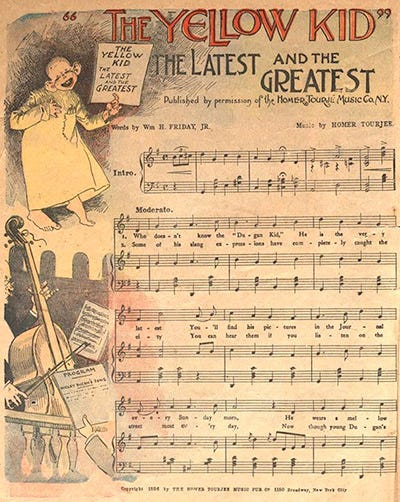
When was the last time you picked up the hot new single from your local sheet music store? Many moons ago sheet music was the music industry, with the only available means of hearing pop songs being to have a musician read and perform them. This quickly eroded with the advent of the phonograph, leading to a record industry that dominated the last century and is now itself eroding due to the explosive growth of independent online publishing.

It’s hard to justify using a massive workforce of recording engineers, media manufacturers, distributors, and talent scouts to accomplish a task that a musician can now do by herself in an afternoon with just a laptop. The same goes for the millions of skilled labor and manufacturing jobs that will soon be crumpled by 3D printing technology, the thousands of retailers whose staff and storefronts can readily be supplanted by automated delivery systems, or the dwindling hospitality and transportation industries currently being pecked away by app-based sharing services like Airbnb and Uber.

Never heard of 3D printing, ridesharing, or “post-work” theory? That’s okay; you can just Google them. In fact, thanks to Google we may now add the very concept of knowledge itself to our growing list of no-longer-scarce resources. When anyone can access the world’s greatest library from their cellphone, even the long-revered skill of knowing things loses its marketability.

The Art School Solution


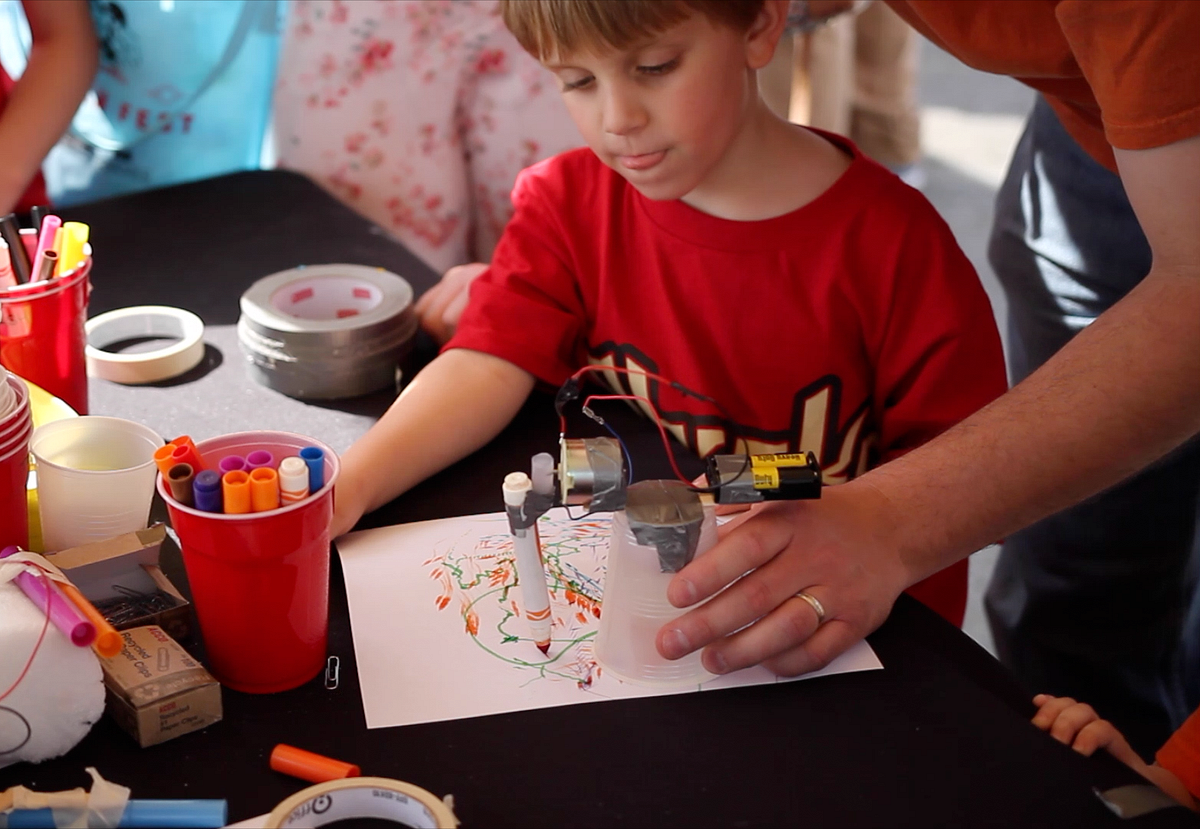
Photo by Jeff White, courtesy of Lowe Mill ARTS & Entertainment


If preparing your kids for a world in which hard-working, knowledgeable people are unemployable frightens you then I have some good news. There is a solution, and it doesn’t involve tired, useless attempts at suppressing technology. Like most good solutions it requires a trait that is distinctly human.

I’m speaking about Creativity.
Send your kids to art school. Heavily invest time and resources into their creative literacy. Do these things and they will stand a chance at finding work and or fulfillment in a future where other human abilities become irrelevant.

Any adult reading this at the time of publication came of age in an era when parents urged children to learn a subject that would funnel straight into a specific career field. Even those parents who encouraged their children’s creative dreams did so with an addendum that we should also consider getting a degree in a practical field that “you can always fall back on if sculpture/philosophy/theater/poetry doesn’t work out”. No doubt this protective instinct was a smart one considering the reality of our youth. An arts education might promise a life of self-discovery but there has always been reasonably assured financial stability in the high-demand arenas of science, education, skilled trades, governments, etc. Surely that dynamic won’t last much longer as more and more physical and mental human tasks are commandeered by machines and software.


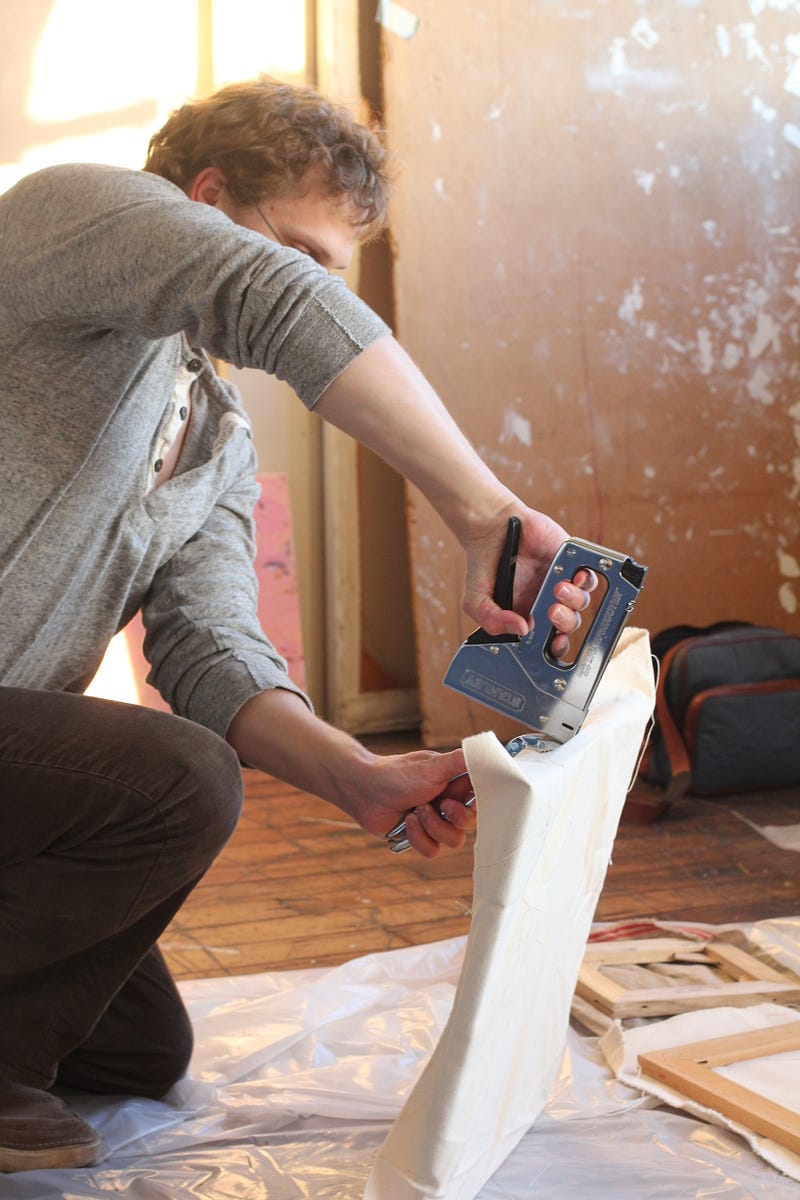
Photo courtesy of Lowe Mill ARTS & Entertainment

I don’t say this to dismiss the importance of any field of study. A world without scientists or doctors or teachers would be just as broken as a world with no artists. Without programmers and engineers the very technologies that make life efficient would quickly disappear. But with the abundance of information and tools freely accessible online to a generation of youngsters equipped with computers from toddlerhood, it’s safe to assume that those who want to maintain current technology have few obstacles in learning how to do so — No degree required. The same goes for any pragmatic skill.


The arts, however, are a polar opposite to pragmatism. Cameras have long exceeded our ability to realistically and efficiently render images, but still our love of painting remains to this day. By now we know that the value of a great painting isn’t in its accuracy at rendering a view but in the artist’s unique capacity to convey a viewpoint. Even those uninterested in “fine” art are driven to make purely aesthetic decisions on practical matters such as clothing, shelter, and transportation. Our willingness to pay extra for beautiful clothes, inviting homes, and sleek cars is motivated not by functionality but by emotionality.


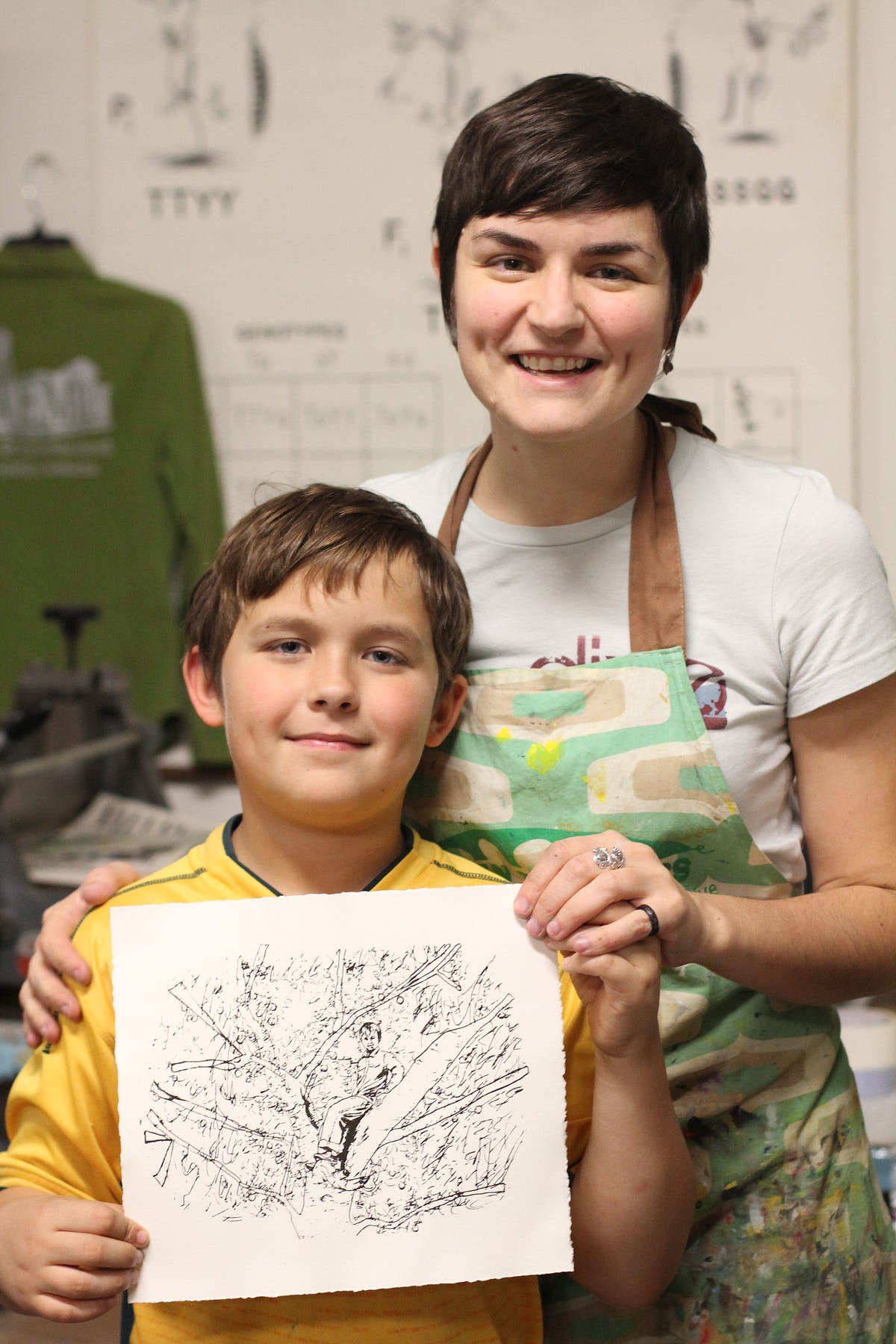
Photo courtesy of Lowe Mill ARTS & Entertainment


It’s inherently human to want the objects in our lives to communicate feelings and ideas to us and about us. The constant searching for and assignment of meaning dwells in everyone, but the artist is the person who exercises this muscle regularly enough to control it. The person with creative literacy — a basic understanding of the mental, emotional, and sociological tools used for creative thought and communication — is able to find purpose and apply meaning to her world rather than having meaning handed down and purpose assigned to her. The painting student completes his senior thesis exhibit with a head full of many more lessons than just how to paint. He’s now equipped with an ability to see problems, connections, and solutions where others see only a blank surface. I assure you this ability is not limited to the canvas.

Photo Courtesy of Lowe Mill ARTS & Entertainment

I’m not saying anything new here. These qualities of a liberal arts education have been expounded by its proprietors for ages, but with major industries quickly running out of a need for worker bees it’s becoming clearer by the day that our professors were right.

In fact it’s somewhat amazing that this idea was ever in question. Humanity’s highest-paid workers have always been those who as a result of their innovations created opportunity for others to work.
There’s a reason Steve Jobs became a billionaire, and it’s not because he could program computers.

Of course history is also filled with countless stories of equally creative figures lost in the systemic grind of working for the Steve Jobs’s of the world. We’ve all known brilliant people, seemingly not made for our time, whose potential was crushed by dead end jobs after their work was rejected by the film/music/publishing/anything industries. The excuse of being ahead of one’s time can no longer apply though. We live in an age where a person speaking into a webcam can collectively raise hundreds of thousands of dollars just by telling people about a good idea. The gatekeepers are gone and they are not coming back. Our only remaining obstacle can be lack of good ideas.

It’s time for a revolution in education that reflects our new reality and gives students the necessary tools to survive it. Technological advancements will always outpace the offerings of the traditional classroom, making it entirely purposeless to force memorization of knowledge that may become irrelevant before children even graduate. Instead we should hone the skill that best ensures adaptability and resourcefulness during times of constant change.
It’s time for the creative classroom.


But what about STEM?


Does this revolution require us to toss out math or science or history? Does my ideal future classroom wedge would-be physicists into an endless curriculum of figure drawing classes?

Absolutely not!

Let children pursue their own interests and they will find their way to all areas of study as part of the exploratory process. Let the child who is in love with fire trucks continue to obsess over fire trucks. With proper guidance he will soon find himself learning civics, engineering, history, physics, chemistry, sociology, economics, and everything in between — all of his questions fueled by a simple aesthetic attachment to the pretty red fire truck.

No healthy child is born without an innate sense of wonder about their world. However, this childhood compulsion to explore is a bud quickly snipped by adults conditioned to fear the unknown. The tradition of discouraging unusual questions and behavior in children is so pervasive that we have come to view those who survive with their creativity intact as having a “gift”. What is more absurd is our amazement at the correlation of great artists and mental illness, as if the battle for self-expression which artists so tenaciously endure has no causal link to their psychic well-being.

Photo Courtesy of Lowe Mill ARTS & Entertainment

The change that will secure your children’s safe passage through the future comes when we strip creativity of its mysterious, unearthly status. Artists are not magical geniuses. We are simply people who were either privileged enough or stubborn enough to hold onto something that every living person is “gifted” at birth. Assume that your children have limitless creative potential and begin to nurture it. Assume that your children’s ingenuity is the one true safety net available in times of rapid change. Send your kids to art school and they will have exactly what they need to become anything they might need to be.

I speak from experience.


Photo by Eric Schultz, Huntsville Times

Dustin Timbrook is an artist in Huntsvill

Thursday, 26 November 2015

Pollokshields Playhouse

While in Glasgow this Saturday I discovered an exciting project with huge potential. Pollokshields Playhouse is, as its name suggests, in Pollokshields, just opposite Tramway. 


It is:

"A place to share new ideas; A place to test new possibilities in your community for the future of your community. A place to celebrate, a place to meet. A place to perform, sing, dance, show, make, talk! It is 
is a new outdoor venue being build by the community for the community."


This project is being delivered by Pollokshields Community Council with support from a selection of organisations and funding bodies.

You can help to build the Playhouse
No experience is necessary. You can drop-in on one of the drop-in days to get involved with basic construction and making. All tools and health and safety equipment will be provided. Sessions will be run by BAXENDALE 


Once the playhouse is built, the community are invited to create the programme. People can come forward with ideas that they can programme in – it can be music, talks, film, performance, or creative workshops. The aim is to develop a programme that reflects the area, that brings people together, that tried out new ideas, and that takes risks.


For more information 

Visit the website: http://www.pollokshieldsplayhouse.com

Call: 07827228692
Visit the Facebook Page at Pollokshields Playhouse

Follow @G41Playhouse on Twitter 


fd
v\
Initiated to generate discussion about the form of public spaces within the community, Pollokshields Playhouse is a grassroots project that seeks to connect people with under-used public space. Through the temporary animation of a redundant and derelict site the project will provide a unique opportunity for testing new possibilities for the future of Pollokshields and Port Eglington."

Pollokshields Playhouse is a work in progress, and is reliant on the involvement of others to help create it.

Go inside and help to build your Playhouse on Wednesdays 12-5pm and on Saturdays 10-4pm.

Sunday, 15 November 2015

Sir Nicholas Serota opens creative free school in Devon

Sir Nicholas Serota, director of Tate, formally opened The Red House, home to Plymouth School of Creative Arts (PSCA), in a ceremony that marked the culmination of a day of events for children, parents, guardians and friends of the school, celebrating the achievements of PSCA students and success of the school to date.

Sir Nicholas said: “You’re creating here something that doesn’t exist anywhere else in the UK. It’s an historic moment for education in this country.”

Founded in Millbay by Plymouth College of Art in 2013, the Plymouth School of Creative Arts is a mainstream city centre 4–16 all-through Free School that, together with the college, is establishing a progressive continuum of creative learning and practice from age four to Masters level study and beyond, into professional employment within the creative and cultural industries.

The school’s purpose is transformation and can be expressed in just four words – creating individuals, making futures. Children and staff learn through making in all subject areas, across a broad and balanced school curriculum.

“This is an incredibly brave venture,” Sir Nicholas Serota said during his opening speech.

“I want to congratulate Andrew Brewerton, Dave Strudwick and the governors of Plymouth College of Art for having the vision and strength to persuade the world that you can make a school that is rooted in imagination, creativity and the arts, and produce students who will be able to face the 21st century and who will bring to it a whole new way of looking at the world. I think it’s an incredible venture and I’m sure it won’t be the only one. I hope Plymouth gets the credit when it’s copied all over the United Kingdom.”

During the daytime there was a celebratory procession of children and staff around the outside of The Red House for friends of the school, after which parents and guardians joined their children inside to experience some of the teaching on offer. Dave Strudwick, the headmaster at Plymouth School of Creative Arts, also invited parents, guardians, students and visitors to each create a wish for the future and the school’s continued growth.

Dave said: “It is a wonderful privilege to be involved in this amazing project.We are delighted that the Red House is already proving to be a success. The whole school community provides a wonderful platform for learning and development enabling our young people to see new possibilities in their lives.”

During the formal opening, Professor Andrew Brewerton, principal of Plymouth College of Art and chair of Governors for the PSCA, addressed guests in The Red House Theatre before Sir Nicholas Serota’s opening speech. PSCA Culinary Arts students from Years 7 and 8 also prepared canapes for the evening drinks reception, which was accompanied by live music performed by parents and students and informal tours of the school.

He said: “The formal opening of The Red House is a very special moment for our extended learning community. Keen interest in our work here is developing nationally and internationally, from France to China to Italy to South Korea and to the USA. We have a very simple proposition – that making is as important as reading and writing and maths and science, and that the creative purpose of learning should be inseparable from the creative purpose of living your life“.

Designed by Feilden Clegg Bradley Studios, The Red House was always designed for pedagogical innovation in creative learning and as a catalyst for community regeneration in Plymouth’s Millbay docklands, supporting the transformation of individual life chances and community aspiration in the long term, with immediate local impact for families in the area.

As a new model of creative education, the Plymouth School of Creative Arts / Plymouth College of Art creative learning continuum has been presented by invitation at the Confindustria Veneto in Italy, Shanghai University and Beijing Design Week in China, Révélations in Paris and the Cheongju International Craft Biennale in South Korea.

Saturday, 3 October 2015

7 Things I learned by Maria Popova

1. Allow yourself the uncomfortable luxury of changing your mind. Cultivate that capacity for “negative capability.” We live in a culture where one of the greatest social disgraces is not having an opinion, so we often form our “opinions” based on superficial impressions or the borrowed ideas of others, without investing the time and thought that cultivating true conviction necessitates. We then go around asserting these donned opinions and clinging to them as anchors to our own reality. It’s enormously disorienting to simply say, “I don’t know.” But it’s infinitely more rewarding to understand than to be right — even if that means changing your mind about a topic, an ideology, or, above all, yourself.


2. Do nothing for prestige or status or money or approval alone. As Paul Graham observed, “prestige is like a powerful magnet that warps even your beliefs about what you enjoy. It causes you to work not on what you like, but what you’d like to like.” Those extrinsic motivators are fine and can feel life-affirming in the moment, but they ultimately don’t make it thrilling to get up in the morning and gratifying to go to sleep at night — and, in fact, they can often distract and detract from the things that do offer those deeper rewards.


3. Be generous. Be generous with your time and your resources and with giving credit and, especially, with your words. It’s so much easier to be a critic than a celebrator. Always remember there is a human being on the other end of every exchange and behind every cultural artifact being critiqued. To understand and be understood, those are among life’s greatest gifts, and every interaction is an opportunity to exchange them.


4. Build pockets of stillness into your life. Meditate. Go for walks. Ride your bike going nowhere in particular. There is a creative purpose to daydreaming, even to boredom. The best ideas come to us when we stop actively trying to coax the muse into manifesting and let the fragments of experience float around our unconscious mind in order to click into new combinations. Without this essential stage of unconscious processing, the entire flow of the creative process is broken.


Most importantly, sleep. Besides being the greatest creative aphrodisiac, sleep also affects our every waking moment, dictates our social rhythm, and even mediates our negative moods. Be as religious and disciplined about your sleep as you are about your work. We tend to wear our ability to get by on little sleep as some sort of badge of honor that validates our work ethic. But what it really is is a profound failure of self-respect and of priorities. What could possibly be more important than your health and your sanity, from which all else springs?


5. When people tell you who they are, Maya Angelou famously advised, believe them. Just as importantly, however, when people try to tell you who you are, don’t believe them. You are the only custodian of your own integrity, and the assumptions made by those that misunderstand who you are and what you stand for reveal a great deal about them and absolutely nothing about you.


6. Presence is far more intricate and rewarding an art than productivity. Ours is a culture that measures our worth as human beings by our efficiency, our earnings, our ability to perform this or that. The cult of productivity has its place, but worshipping at its altar daily robs us of the very capacity for joy and wonder that makes life worth living — for, as Annie Dillard memorably put it, “how we spend our days is, of course, how we spend our lives.”


7. “Expect anything worthwhile to take a long time.” This is borrowed from the wise and wonderful Debbie Millman, for it’s hard to better capture something so fundamental yet so impatiently overlooked in our culture of immediacy. The myth of the overnight success is just that — a myth — as well as a reminder that our present definition of success needs serious retuning. As I’ve reflected elsewhere, the flower doesn’t go from bud to blossom in one spritely burst and yet, as a culture, we’re disinterested in the tedium of the blossoming. But that’s where all the real magic unfolds in the making of one’s character and destiny.


Popova, M. (2013) Happy Birthday, Brain Pickings: 7 Things I Learned in 7 Years of Reading, Writing, and Living. Available at: https://www.brainpickings.org/2013/10/23/7-lessons-from-7-years/ (Accessed: 2 October 2015).

Monday, 20 July 2015

Observing the creative process

As artists like PJ Harvey, Mike Figgis and FKA Twigs allow members of the public to observe their creative process, the Front Row episode on Friday 17th July examined what both artist and fan get out of the experience. Instances such as being witness to a musician recording an album, or a visual artist installing an exhibition, allow the public to see 'behind the scenes', hear the discussions that happen between the artist (in the broadest sense of the word) and the team working with them.

The creative process is demystified, and the audience gets an incite into an relatively private space. 
Participation in process is not a new concept, but the current generation are very open to process. The programme was keen to point out that although the younger generation are raised with Facebook and social media being normal, hence the sharing of information with a wide audience is common practice, those from older generations are also joining in with such practice.

But what is it like for the viewer and the artist engaging in this experience? Does the situation seem staged? The viewer an outsider looking at something happen, or a participant involved in something? How is the experience improved for the audience? Michael Morris from ArtAngel explained that in a recent project of this kind, they tried to heighten the experience of the viewer by setting the situation in a kind of vitrine, like a sculpture in itself, with a lot for the viewers to take in. 

"There are generations of people who do not want to be passive spectators, they want to be engaged participants, they want to know more, they want to not just consume the final product, but somehow have an experience of the process".

As for the artists, lots of artists want to be left alone when they are working. Some would find it difficult to get things done because they would be regularly distracted or interrupted by people asking questions.

I have been thinking about the writing of this blog, which is, in effect, the kind of sharing of information to a wide public via the internet, that the programme mentioned. I find keeping the blog it useful, and regard it as an online sketchbook, and a record of the progression of a work or exhibition. It is also very rewarding when someone gets in contact with comments about my work and suggestions of things that may interest me. So, please do continue to do that! My blog provides a chronological record of my ideas, and it is interesting to review how the work comes into being.

I hope that you enjoy viewing my blog, and am always open to feedback and comments, so please do get in touch with your thoughts.

send me an email: helen.shaddock(at)yahoo.co.uk                                                                                                                                                                                                                                                             

Friday, 20 September 2013

What Is Creativity? Cultural Icons on What Ideation Is and How It Works by Maria Popova

In a recent newsletter from Brain Pickings, Maria Popova looked at the notion of creativity.

Brain Pickings has a free weekly interestingness digest. It comes out on Sundays and offers excellent articles from the week. The original article can be read at http://www.brainpickings.org/index.php/2013/09/06/what-is-creativity/


Bradbury, Eames, Angelou, Gladwell, Einstein, Byrne, Duchamp, Close, Sendak, and more.
 
“Creativity” is one of those grab-bag terms, like “happiness” and “love,” that can mean so many things it runs the risk of meaning nothing at all. And yet some of history’s greatest minds have attempted to capture, explain, describe, itemize, and dissect the nature of creativity. After similar omnibi of cultural icons’ most beautiful and articulate definitions of art, of science, and of love, here comes one of creativity.

For Ray Bradbury, creativity was the art of muting the rational mind:
The intellect is a great danger to creativity … because you begin to rationalize and make up reasons for things, instead of staying with your own basic truth — who you are, what you are, what you want to be. I’ve had a sign over my typewriter for over 25 years now, which reads “Don’t think!” You must never think at the typewriter — you must feel. Your intellect is always buried in that feeling anyway. … The worst thing you do when you think is lie — you can make up reasons that are not true for the things that you did, and what you’re trying to do as a creative person is surprise yourself — find out who you really are, and try not to lie, try to tell the truth all the time. And the only way to do this is by being very active and very emotional, and get it out of yourself — making things that you hate and things that you love, you write about these then, intensely.
Long before he was became the artist we know and love, a young Maurice Sendak full of self-doubt wrote in a letter to his editor, the remarkable Ursula Nordstrom:
Knowledge is the driving force that puts creative passion to work.
In writing back, Nordstrom responded with her signature blend of wisdom and assurance:
That is the creative artist — a penalty of the creative artist — wanting to make order out of chaos.

Portrait by Lisa Congdon for our Reconstructionists project. Click image for details.

Bill Moyers is credited with having offered a sort of mirror-image definition that does away with order and seeks, instead, magical chaos:
Creativity is piercing the mundane to find the marvelous.
For Albert Einstein, its defining characteristic was what he called “combinatory play”. In a letter to a French mathematician, included in Einstein’s Ideas and Opinions (public library), he writes:
The words or the language, as they are written or spoken, do not seem to play any role in my mechanism of thought. The psychical entities which seem to serve as elements in thought are certain signs and more or less clear images which can be “voluntarily” reproduced and combined.
There is, of course, a certain connection between those elements and relevant logical concepts. It is also clear that the desire to arrive finally at logically connected concepts is the emotional basis of this rather vague play with the above-mentioned elements. But taken from a psychological viewpoint, this combinatory play seems to be the essential feature in productive thought — before there is any connection with logical construction in words or other kinds of signs which can be communicated to others.

Portrait by Lisa Congdon for our Reconstructionists project. Click image for details.
For Maya Angelou, a modern-day sage of the finest kind, the mystery and miracle of creativity is in its self-regenerating nature. In the excellent collection Conversations with Maya Angelou (public library), which also gave us her poignant exchange with Bill Moyers, Angelou says:
Creativity or talent, like electricity, is something I don’t understand but something I’m able to harness and use. While electricity remains a mystery, I know I can plug into it and light up a cathedral or a synagogue or an operating room and use it to help save a life. Or I can use it to electrocute someone. Like electricity, creativity makes no judgment. I can use it productive or destructively. The important thing is to use it. You can’t use up creativity. The more you use it, the more you have.
Tom Bissell, writing in Magic Hours: Essays on Creators and Creation, also celebrates this magical quality of creativity:
To create anything … is to believe, if only momentarily, you are capable of magic. … That magic … is sometimes perilous, sometimes infectious, sometimes fragile, sometimes failed, sometimes infuriating, sometimes triumphant, and sometimes tragic.
But there might be something more precise and less mystical about the creative process. In Uncommon Genius: How Great Ideas Are Born (public library), the fantastic collection of interviews with MacArthur “genius” grantees by Denise Shekerjian, she recapitulates her findings:
The trick to creativity, if there is a single useful thing to say about it, is to identify your own peculiar talent and then to settle down to work with it for a good long time.
Shekerjian interviews the late Stephen Jay Gould, arguably the best science writer of all time, who describes his own approach to creativity as the art of making connections, which Shekerjian synthesizes:
Gould’s special talent, that rare gift for seeing the connections between seemingly unrelated things, zinged to the heart of the matter. Without meaning to, he had zeroed in on the most popular of the manifold definitions of creativity: the idea of connecting two unrelated things in an efficient way. The surprise we experience at such a linkage brings us up short and causes us to think, Now that’s creative.
This notion, of course, is not new. In his timelessly insightful 1939 treatise A Technique for Producing Ideas (public library), outlining the five stages of ideation, James Webb Young asserts:
An idea is nothing more nor less than a new combination of old elements [and] the capacity to bring old elements into new combinations depends largely on the ability to see relationships. The habit of mind which leads to a search for relationships between facts becomes of the highest importance in the production of ideas.
Three years later, in 1942, Rosamund Harding added another dimension of stressing the importance of cross-disciplinary combinations in wonderful out-of-print tome An Anatomy of Inspiration:
Originality depends on new and striking combinations of ideas. It is obvious therefore that the more a man knows the greater scope he has for arriving at striking combinations. And not only the more he knows about his own subject but the more he knows beyond it of other subjects. It is a fact that has not yet been sufficiently stressed that those persons who have risen to eminence in arts, letters or sciences have frequently possessed considerable knowledge of subjects outside their own sphere of activity.
Seven decades later, Phil Beadle echoes this concept in his wonderful blueprint field guide to creativity, Dancing About Architecture: A Little Book of Creativity (public library):
It is the ability to spot the potential in the product of connecting things that don’t ordinarily go together that marks out the person who is truly creative.
Steve Jobs famously articulated this notion and took it a step further, emphasizing the importance of building a rich personal library of experiences and ideas to connect:
Creativity is just connecting things. When you ask creative people how they did something, they feel a little guilty because they didn’t really do it, they just saw something. It seemed obvious to them after a while. That’s because they were able to connect experiences they’ve had and synthesize new things. And the reason they were able to do that was that they’ve had more experiences or they have thought more about their experiences than other people. Unfortunately, that’s too rare a commodity. A lot of people in our industry haven’t had very diverse experiences. So they don’t have enough dots to connect, and they end up with very linear solutions without a broad perspective on the problem. The broader one’s understanding of the human experience, the better design we will have.
Musician Amanda Palmer puts this even more poetically in her meditation on dot-connecting and creativity:
We can only connect the dots that we collect, which makes everything you write about you. … Your connections are the thread that you weave into the cloth that becomes the story that only you can tell.
Beloved graphic designer Paula Scher has a different metaphor for the same concept. In Debbie Millman’s How to Think Like a Great Graphic Designer (UK; public library), she likens creativity to a slot machine:
There’s a certain amount of intuitive thinking that goes into everything. It’s so hard to describe how things happen intuitively. I can describe it as a computer and a slot machine. I have a pile of stuff in my brain, a pile of stuff from all the books I’ve read and all the movies I’ve seen. Every piece of artwork I’ve ever looked at. Every conversation that’s inspired me, every piece of street art I’ve seen along the way. Anything I’ve purchased, rejected, loved, hated. It’s all in there. It’s all on one side of the brain.
And on the other side of the brain is a specific brief that comes from my understanding of the project and says, okay, this solution is made up of A, B, C, and D. And if you pull the handle on the slot machine, they sort of run around in a circle, and what you hope is that those three cherries line up, and the cash comes out.
But Arthur Koestler, in his seminal 1964 anatomy of creativity, The Act Of Creation (public library), argues that besides connection, the creative act necessitates contrast, or what he termed “bisociation”:
The pattern underlying [the creative act] is the perceiving of a situation or idea in two self-consistent but habitually incompatible frames of references. The event, in which the two intersect, is made to vibrate simultaneously on two different wavelengths, as it were. While this unusual situation lasts, [the event] is not merely linked to one associative context, but bisociated with two.
I have coined the term ‘bisociation’ in order to make a distinction between the routine skills of thinking on a single ‘plane,’ as it were, and the creative act, which … always operates on more than one plane. The former can be called single-minded, the latter double-minded, transitory state of unstable equilibrium where the balance of both emotion and thought is disturbed.
He differentiated between cognitive habit, or merely associative thought, and originality, or bisociative ideation, thusly:

Twenty years later, creative icon and original Mad Man George Lois echoed Koestler in his influential tome The Art of Advertising: George Lois on Mass Communication (public library):
Creativity can solve almost any problem. The creative act, the defeat of habit by originality, overcomes everything.
For Gretchen Rubin, however, habit isn’t the enemy of creativity but its engine. In Manage Your Day-to-Day: Build Your Routine, Find Your Focus, and Sharpen Your Creative Mind, she writes:
Anthony Trollope, the nineteenth-century writer who managed to be a prolific novelist while also revolutionizing the British postal system, observed, “A small daily task, if it be really daily, will beat the labours of a spasmodic Hercules.” Over the long run, the unglamorous habit of frequency fosters both productivity and creativity.
[…]
You’re much more likely to spot surprising relationships and to see fresh connections among ideas, if your mind is constantly humming with issues related to your work. … By contrast, working sporadically makes it hard to keep your focus. It’s easy to become blocked, confused, or distracted, or to forget what you were aiming to accomplish.
[…]
Creativity arises from a constant churn of ideas, and one of the easiest ways to encourage that fertile froth is to keep your mind engaged with your project. When you work regularly, inspiration strikes regularly.
In 1926, English social psychologist and London School of Economics co-founder Graham Wallas penned The Art of Thought, laying out his theory for how creativity works. Its gist, preserved in the altogether indispensable The Creativity Question (public library), identifies the four stages of the creative process — preparation, incubation, illumination, and verification — and their essential interplay:
In the daily stream of thought these four different stages constantly overlap each other as we explore different problems. An economist reading a Blue Book, a physiologist watching an experiment, or a business man going through his morning’s letters, may at the same time be “incubating” on a problem which he proposed to himself a few days ago, be accumulating knowledge in “preparation” for a second problem, and be “verifying” his conclusions on a third problem. Even in exploring the same problem, the mind may be unconsciously incubating on one aspect of it, while it is consciously employed in preparing for or verifying another aspect. And it must always be remembered that much very important thinking, done for instance by a poet exploring his own memories, or by a man trying to see clearly his emotional relation to his country or his party, resembles musical composition in that the stages leading to success are not very easily fitted into a “problem and solution” scheme. Yet, even when success in thought means the creation of something felt to be beautiful and true rather than the solution of a prescribed problem, the four stages of Preparation, Incubation, Illumination, and the Verification of the final result can generally be distinguished from each other.
But Malcolm Gladwell, in reflecting on the legacy of legendary economist Albert O. Hirscham in his review of Worldly Philosopher: The Odyssey of Albert O. Hirschman, doesn’t think the creative process is so deliberate:
Creativity always comes as a surprise to us; therefore we can never count on it and we dare not believe in it until it has happened. In other words, we would not consciously engage upon tasks whose success clearly requires that creativity be forthcoming. Hence, the only way in which we can bring our creative resources fully into play is by misjudging the nature of the task, by presenting it to ourselves as more routine, simple, undemanding of genuine creativity than it will turn out to be.
But David Byrne is skeptical of this romantic notion that creativity is a purely subconscious muse that dances to its own mystical drum. In How Music Works (public library), one of the best music books of 2012, he writes:
I had an extremely slow-dawning insight about creation. That insight is that context largely determines what is written, painted, sculpted, sung, or performed. That doesn’t sound like much of an insight, but it’s actually the opposite of conventional wisdom, which maintains that creation emerges out of some interior emotion, from an upwelling of passion or feeling, and that the creative urge will brook no accommodation, that it simply must find an outlet to be heard, read, or seen. The accepted narrative suggests that a classical composer gets a strange look in his or her eye and begins furiously scribbling a fully realized composition that couldn’t exist in any other form. Or that the rock-and-roll singer is driven by desires and demons, and out bursts this amazing, perfectly shaped song that had to be three minutes and twelve seconds — nothing more, nothing less. This is the romantic notion of how creative work comes to be, but I think the path of creation is almost 180º from this model. I believe that we unconsciously and instinctively make work to fit preexisting formats.
Of course, passion can still be present. Just because the form that one’s work will take is predetermined and opportunistic (meaning one makes something because the opportunity is there), it doesn’t mean that creation must be cold, mechanical, and heartless. Dark and emotional materials usually find a way in, and the tailoring process — form being tailored to fit a given context — is largely unconscious, instinctive. We usually don’t even notice it. Opportunity and availability are often the mother of invention.
For John Cleese, creativity is neither a conscious plan of attack nor an unconscious mystery, but a mode of being. In his superb 1991 talk on the five factors of creativity, he asserts in his characteristic manner of laconic wisdom:
Creativity is not a talent. It is a way of operating.
In Inside the Painter’s Studio (public library), celebrated artist Chuck Close is even more exacting in his take on this “way of operating,” equating creativity with work ethic:
Inspiration is for amateurs — the rest of us just show up and get to work.
In his short 1957 paper The Creative Act, French surrealist icon Marcel Duchamp considers the work of creativity a participatory project involving both creator and spectator:
The creative act is not performed by the artist alone; the spectator brings the work in contact with the external world by deciphering and interpreting its inner qualifications and thus adds his contribution to the creative act. This becomes even more obvious when posterity gives a final verdict and sometimes rehabilitates forgotten artists.
Meanwhile, artist Austin Kleon, author of the wonderful Steal Like an Artist, celebrates the negative space of the creative act in his Newspaper Blackout masterpiece:

But perhaps, after all, we should heed Charles Eames’s admonition:
Recent years have shown a growing preoccupation with the circumstances surrounding the creative act and a search for the ingredients that promote creativity. This preoccupation in itself suggests that we are in a special kind of trouble — and indeed we are.

Thursday, 4 July 2013

Creative Lab and Centre for Modern Thought Public Seminar: Creative Work

My role of Project Researcher for the Higher Education Academy funded project, Anatomy of Employability, at Glasgow School of Art has resulted in me meeting lots of very interesting people. Today was no exception. I met with Jen Clarke who is working with the Scottish Government to investigate the nature of creativity within education. She would like to refer to the research that I have been carrying out, and so we met to discuss the findings.


Jen is involved in a workshop to be held at the CCA on Saturday 13th July 2013 from 1pm-4pm.

As part of Echo Chamber's Creative Lab Residency, this workshop will explore philosophical and critical questions around “creative work”.

Engaging with cultural policy and research, we will examine how creative work is variously understood by artists, academics, and government, opening out to a conversation with the workshop participants. What is at stake when creative work is approached in terms of either innovation or improvisation? What is the difference between work and labour? Is collaboration necessarily creative? Working away from economic frameworks for art and research, we move towards “creative work” understood in terms of our relations with others.

The event brings together policy makers from the Scottish Government, artists, researchers and the public to confront questions at stake in the cultural and public sector amidst the noise of artists experimenting in the Creative Lab with visiting guest Alana Jelinek.
This event is a collaboration between CCA Creative Lab Residency and Centre for Modern Thought, Aberdeen.