Showing posts with label Art School. Show all posts

Tuesday, 24 July 2018

All Schools Should Be Art Schools by Bob and Roberta Smith at Yorkshire Sculpture Park

Aptly situated by the Learning building at Yorkshire Sculpture Park, Rob and Roberta Smith's inspirational statement 'All Schools Should Be Art Schools' is intended to prompt political action. 


The artist made the work in April 2017, after Michael Gove (who was Secretary of State for Education) proposed that Art should be removed from the GCSE core curriculum in England.


Sunday, 31 January 2016

Want Your Children to Survive The Future? Send Them to Art School


Want Your Children to Survive The Future? Send Them to Art School

Can you imagine a world in which most jobs are obsolete?

If not, you are most likely in for a rude awakening in the coming decades of radical shifts in employment. This is particularly true for new parents propelling the next generation of workers into an adulthood that many economists and futurists predict to be the first ever “post-work” society.

Though the idea of a jobless world may seem radical, the prediction is based on the natural trajectory of ‘creative destruction’ — that classic economic principle by which established industries are decimated when made irrelevant by new technologies.


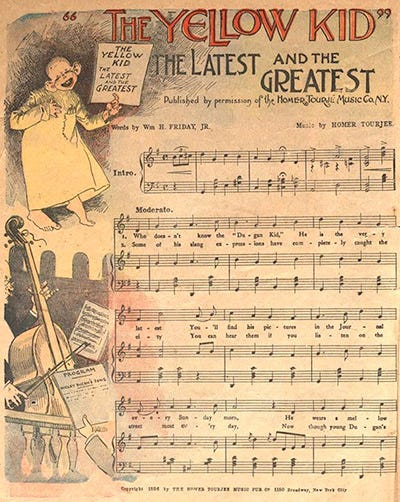
When was the last time you picked up the hot new single from your local sheet music store? Many moons ago sheet music was the music industry, with the only available means of hearing pop songs being to have a musician read and perform them. This quickly eroded with the advent of the phonograph, leading to a record industry that dominated the last century and is now itself eroding due to the explosive growth of independent online publishing.

It’s hard to justify using a massive workforce of recording engineers, media manufacturers, distributors, and talent scouts to accomplish a task that a musician can now do by herself in an afternoon with just a laptop. The same goes for the millions of skilled labor and manufacturing jobs that will soon be crumpled by 3D printing technology, the thousands of retailers whose staff and storefronts can readily be supplanted by automated delivery systems, or the dwindling hospitality and transportation industries currently being pecked away by app-based sharing services like Airbnb and Uber.

Never heard of 3D printing, ridesharing, or “post-work” theory? That’s okay; you can just Google them. In fact, thanks to Google we may now add the very concept of knowledge itself to our growing list of no-longer-scarce resources. When anyone can access the world’s greatest library from their cellphone, even the long-revered skill of knowing things loses its marketability.

The Art School Solution


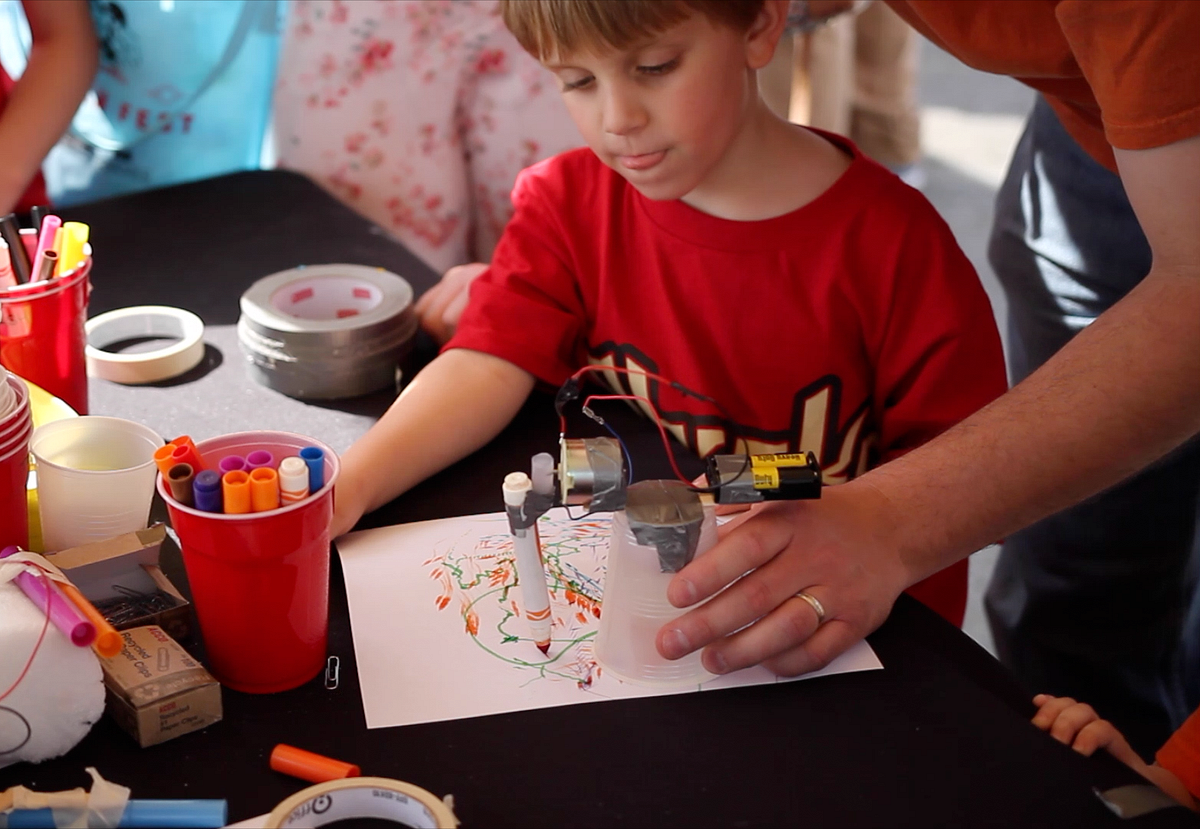
Photo by Jeff White, courtesy of Lowe Mill ARTS & Entertainment


If preparing your kids for a world in which hard-working, knowledgeable people are unemployable frightens you then I have some good news. There is a solution, and it doesn’t involve tired, useless attempts at suppressing technology. Like most good solutions it requires a trait that is distinctly human.

I’m speaking about Creativity.
Send your kids to art school. Heavily invest time and resources into their creative literacy. Do these things and they will stand a chance at finding work and or fulfillment in a future where other human abilities become irrelevant.

Any adult reading this at the time of publication came of age in an era when parents urged children to learn a subject that would funnel straight into a specific career field. Even those parents who encouraged their children’s creative dreams did so with an addendum that we should also consider getting a degree in a practical field that “you can always fall back on if sculpture/philosophy/theater/poetry doesn’t work out”. No doubt this protective instinct was a smart one considering the reality of our youth. An arts education might promise a life of self-discovery but there has always been reasonably assured financial stability in the high-demand arenas of science, education, skilled trades, governments, etc. Surely that dynamic won’t last much longer as more and more physical and mental human tasks are commandeered by machines and software.


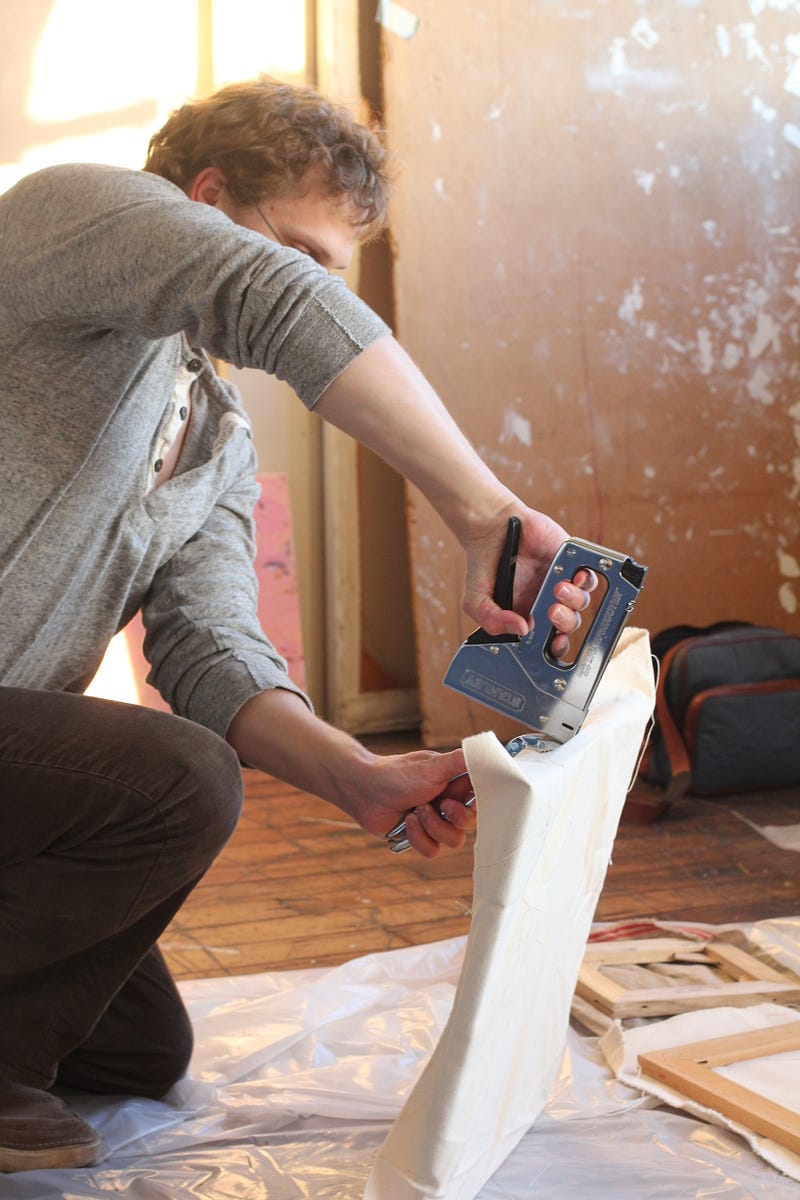
Photo courtesy of Lowe Mill ARTS & Entertainment

I don’t say this to dismiss the importance of any field of study. A world without scientists or doctors or teachers would be just as broken as a world with no artists. Without programmers and engineers the very technologies that make life efficient would quickly disappear. But with the abundance of information and tools freely accessible online to a generation of youngsters equipped with computers from toddlerhood, it’s safe to assume that those who want to maintain current technology have few obstacles in learning how to do so — No degree required. The same goes for any pragmatic skill.


The arts, however, are a polar opposite to pragmatism. Cameras have long exceeded our ability to realistically and efficiently render images, but still our love of painting remains to this day. By now we know that the value of a great painting isn’t in its accuracy at rendering a view but in the artist’s unique capacity to convey a viewpoint. Even those uninterested in “fine” art are driven to make purely aesthetic decisions on practical matters such as clothing, shelter, and transportation. Our willingness to pay extra for beautiful clothes, inviting homes, and sleek cars is motivated not by functionality but by emotionality.


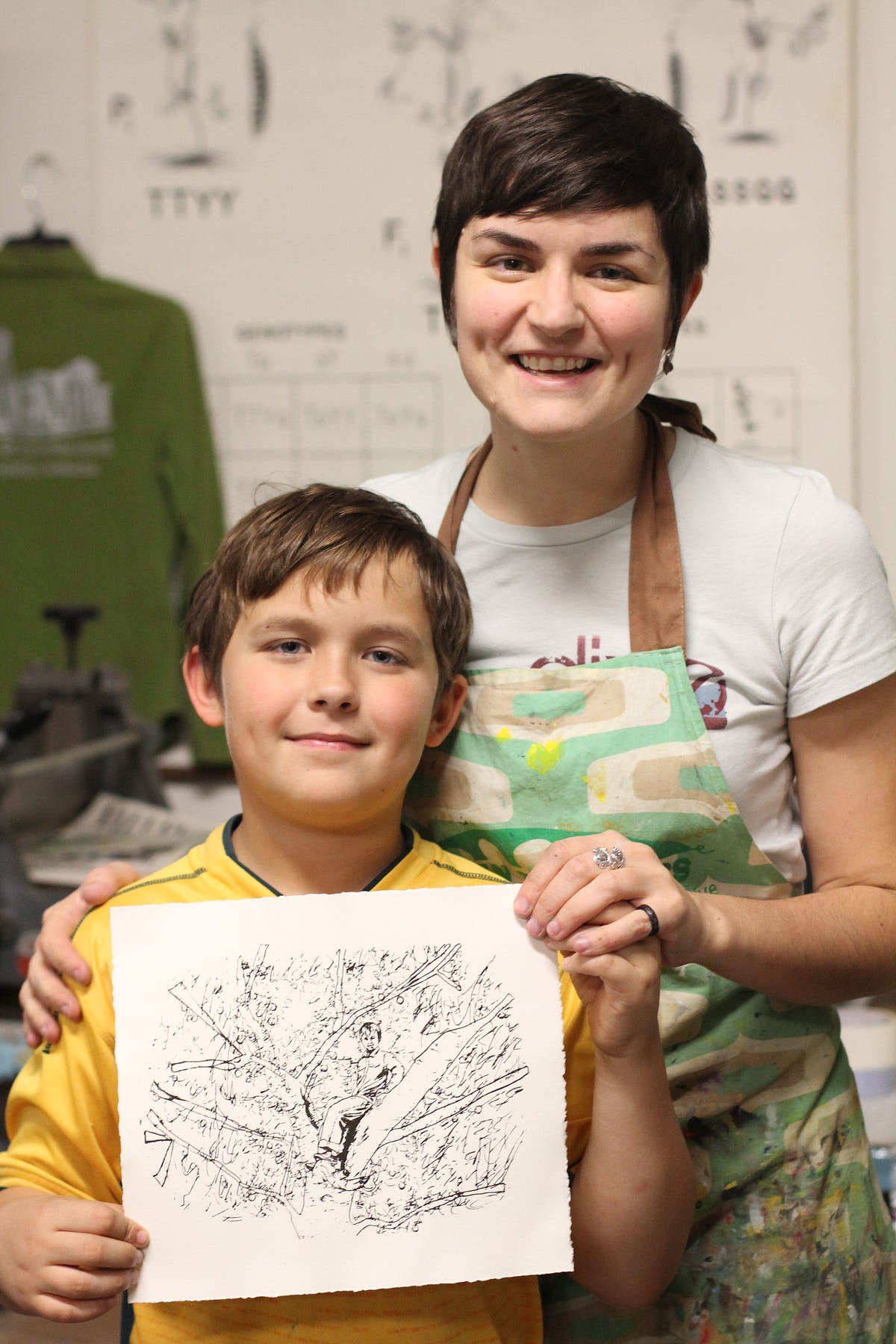
Photo courtesy of Lowe Mill ARTS & Entertainment


It’s inherently human to want the objects in our lives to communicate feelings and ideas to us and about us. The constant searching for and assignment of meaning dwells in everyone, but the artist is the person who exercises this muscle regularly enough to control it. The person with creative literacy — a basic understanding of the mental, emotional, and sociological tools used for creative thought and communication — is able to find purpose and apply meaning to her world rather than having meaning handed down and purpose assigned to her. The painting student completes his senior thesis exhibit with a head full of many more lessons than just how to paint. He’s now equipped with an ability to see problems, connections, and solutions where others see only a blank surface. I assure you this ability is not limited to the canvas.

Photo Courtesy of Lowe Mill ARTS & Entertainment

I’m not saying anything new here. These qualities of a liberal arts education have been expounded by its proprietors for ages, but with major industries quickly running out of a need for worker bees it’s becoming clearer by the day that our professors were right.

In fact it’s somewhat amazing that this idea was ever in question. Humanity’s highest-paid workers have always been those who as a result of their innovations created opportunity for others to work.
There’s a reason Steve Jobs became a billionaire, and it’s not because he could program computers.

Of course history is also filled with countless stories of equally creative figures lost in the systemic grind of working for the Steve Jobs’s of the world. We’ve all known brilliant people, seemingly not made for our time, whose potential was crushed by dead end jobs after their work was rejected by the film/music/publishing/anything industries. The excuse of being ahead of one’s time can no longer apply though. We live in an age where a person speaking into a webcam can collectively raise hundreds of thousands of dollars just by telling people about a good idea. The gatekeepers are gone and they are not coming back. Our only remaining obstacle can be lack of good ideas.

It’s time for a revolution in education that reflects our new reality and gives students the necessary tools to survive it. Technological advancements will always outpace the offerings of the traditional classroom, making it entirely purposeless to force memorization of knowledge that may become irrelevant before children even graduate. Instead we should hone the skill that best ensures adaptability and resourcefulness during times of constant change.
It’s time for the creative classroom.


But what about STEM?


Does this revolution require us to toss out math or science or history? Does my ideal future classroom wedge would-be physicists into an endless curriculum of figure drawing classes?

Absolutely not!

Let children pursue their own interests and they will find their way to all areas of study as part of the exploratory process. Let the child who is in love with fire trucks continue to obsess over fire trucks. With proper guidance he will soon find himself learning civics, engineering, history, physics, chemistry, sociology, economics, and everything in between — all of his questions fueled by a simple aesthetic attachment to the pretty red fire truck.

No healthy child is born without an innate sense of wonder about their world. However, this childhood compulsion to explore is a bud quickly snipped by adults conditioned to fear the unknown. The tradition of discouraging unusual questions and behavior in children is so pervasive that we have come to view those who survive with their creativity intact as having a “gift”. What is more absurd is our amazement at the correlation of great artists and mental illness, as if the battle for self-expression which artists so tenaciously endure has no causal link to their psychic well-being.

Photo Courtesy of Lowe Mill ARTS & Entertainment

The change that will secure your children’s safe passage through the future comes when we strip creativity of its mysterious, unearthly status. Artists are not magical geniuses. We are simply people who were either privileged enough or stubborn enough to hold onto something that every living person is “gifted” at birth. Assume that your children have limitless creative potential and begin to nurture it. Assume that your children’s ingenuity is the one true safety net available in times of rapid change. Send your kids to art school and they will have exactly what they need to become anything they might need to be.

I speak from experience.


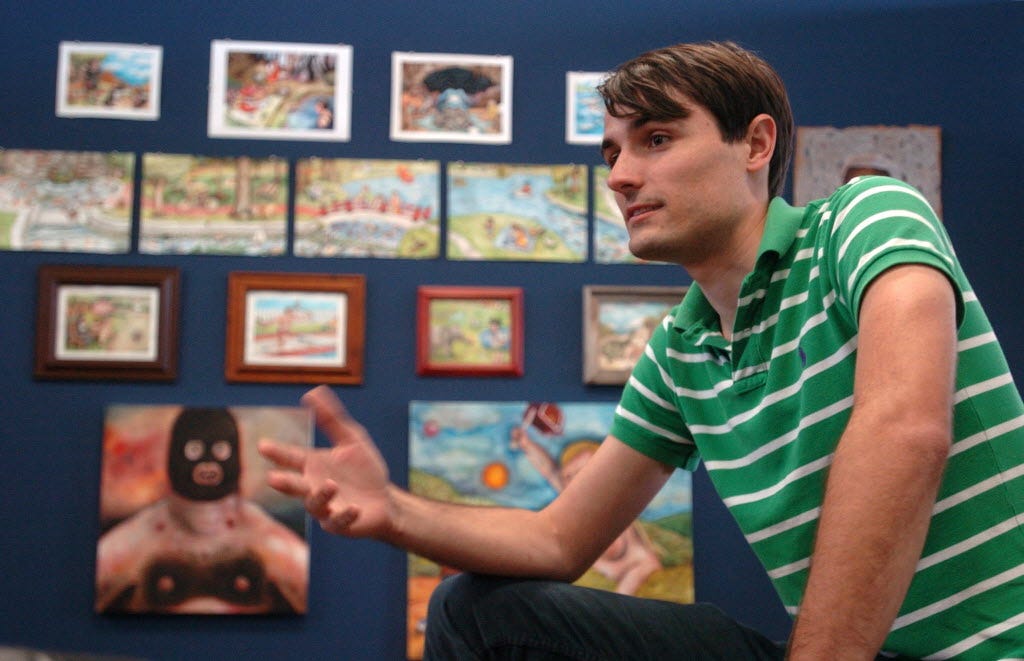
Photo by Eric Schultz, Huntsville Times

Dustin Timbrook is an artist in Huntsvill

Tuesday, 25 November 2014

Art School, Smart School on BBC Radio 4

This pertinent radio programme addresses some of the current challenges to face Universities, and Art Schools in particular.

'British art schools have produced some of the world's most successful artists, designers, filmmakers and musicians. Britain has built up a strong reputation for creativity around the world and politicians are interested in capitalising on our creative brand.

Brian Eno was at art school at a particularly exciting time. In the sixties, art colleges were independent and experimental; students were challenged to rethink what art and art education were about. Brian relates his memories of Ipswich College of Art under the radical educationalist Roy Ascot, and reflects on the importance of this experience. But he also sounds a warning note - he says art schools are under huge pressures and the effects are threatening creativity.

This programme brings together artists, musicians, art tutors and archive recordings to explore the last half century of art education and the state of Britain's art schools today.

We hear the perspectives of high profile figures in art and design - Grayson Perry, Richard Wentworth, Eileen Cooper, Peter Kindersley, and Jay Osgerby to name a few.

Britain depends on its art schools if it's to sustain its reputation for creativity. But are art schools becoming too much like universities and excluding those very people who will produce the innovations of the future?'

http://www.bbc.co.uk/programmes/b04pr1w2

Saturday, 22 November 2014

Is this the end of the British art school?

Art schools used to be a place where the socially and intellectually marginal could distinguish themselves. Now, with unattainable entry requirements and a hefty price tag, they’re becoming a dwelling place for commercial interests and the children of the international elite.

by Isabel Sutton 
Published 20 November, 2014
New Statesman


The old Central Saint Martins building in central London. Photograph: Getty Images.


When the Great Exhibition opened its doors in 1851, Britain’s reputation as the workshop of the world was on the wane. Few visitors would have known it at the time, but the exhibition signified the high watermark of British manufacturing. French design and Prussian engineering were already edging ahead. In 2012, London hosted another event designed to present Britain to the world – one which referenced the upheaval of the Industrial Revolution by featuring towering smoke stacks and beating drums.

Danny Boyle’s Olympic opening ceremony represented British history as a creative blossoming that started in the nineteenth century but seemed to reach its zenith in the twentieth century when fashion, film and pop music boomed. And yet it seems to me that Boyle’s Olympic opener – just like the Great Exhibition – was telling a story about Britain that had already ceased to be true. The circumstances which made it possible for artists to thrive in Britain during the twentieth century are rapidly disappearing. And perhaps one of the most essential changes is in our art schools.

Name any one of the UK’s most famous designers or musicians, never mind artists, and they are likely to have set foot in an art school at one time or other: David Bowie, Pete Townsend, Brian Eno, Vivienne Westwood, John Galliano. I could go on and on. Economist Hasan Bakhshi [3] of innovation charity Nesta says that he is frequently asked about how we run our art schools by educationalists abroad. Art schools are perceived by many as the key to our creative success.

Yet art schools have changed dramatically over the last 20–30 years, causing many to question whether they will, in the future, cultivate the innovators we so badly need. Art schools used to be havens for students who, for whatever reason, had not found their niche in the traditional academic system. Now prospective art students very often have to prove their academic credentials to compete for a place at the most prestigious colleges. Once on the course, art students have to submit an increasing volume of written work, arguably a distraction from practical skills and craft.

Tuition fees have made higher education in Britain more expensive than anywhere else in Europe, and art schools are no exception. This means that the social and economic mix is disappearing (students from poorer backgrounds being less inclined to take out a loan for a non-vocational subject such as fine art). What’s more, art schools are going out of their way to attract foreign students for the extra income they bring. Unsurprisingly, there is deep concern among many artists and teachers that the age of the art school is – to quote Sir Christopher Frayling – “over”.

Frayling was, until 2009, dean of one of Britain’s most venerable art schools, the Royal College (RCA). But as I walked its corridors with him recently, he admitted that even this renowned institution has suffered from the same damaging developments as art schools around the country: workshops for ceramics, printing, and metalwork have been replaced by computer rooms, digital expertise is prioritised before craft; student numbers are rocketing and teaching hours are sinking.

Designer Jay Osgerby [4] graduated with a Masters in architecture from the Royal College of Art. He’s one of a generation of British designers who are now leading design practice around the world, in every field from fashion to technology. The head of Burberry, Christopher Bailey, was in the same year as Jay and his partner Edward Barber; Thomas Heatherwick was another who attended the RCA around the same time; and Apple’s Jonathan Ive was an industrial design student at Newcastle Polytechnic.

Osgerby remembers the RCA as a place where people were constantly making things. The lift was continuously crammed with half-made dresses and furniture being ferried up and down. The RCA, he believes, still manages to hold on to this highly practical ethos, but everywhere he sees the rise of computers taking the place of the hand-made: computers, he says “make you look like an innovator rather than a throw-back to the industrial revolution, but I think that’s a really big mistake.”

The truth is that workshops are expensive and that’s a good enough reason to get rid of them. As education is effectively privatised, art school managers are more interested in business models than the experience of students. An art school such as Central Saint Martins (part of the University of the Arts London) recruits around 40 per cent of its BA students from overseas. It also runs short courses for members of the public. This extra income allows the art school to do a few “special things”, says its head Jeremy Till, such as putting on two degree shows so splendid they attracted almost 50,000 people earlier this year. He says the new building at Kings Cross (where the art school moved from its West End site in 2011) makes the art school a “cultural destination”. Never mind the fact that some staff and students feel uncomfortable with the monolithic, anonymous architecture (one tutor told me that there’s never enough studio space for everyone, you can’t open windows, and you no longer meet people from other courses despite the fact that everyone is now on the same premises.)

So is it necessary to impress the public with a dazzling building and exciting brand? Jeremy Till would tell you that it’s exactly this kind of self-presentation that’s encouraged Google to locate its European offices right next door to Central Saint Martins’ new building at Kings Cross in North London. And maybe he’s got a point. Google might offer jobs to some of the young “creatives” who step out of Saint Martins’ sliding doors. But there’s a balance to be struck. If Central Saint Martins isn’t concentrating attention – above all – on the experience of students within its walls, then the shiny exterior will become just that – a façade, a front, a shop window. Nothing more.

Wednesday, 26 February 2014

How to succeed at Art School - animation by Thomas Slater and Andy Baker

As you may know, I am the Project Researcher for a project funded by the Higher Education Academy (HEA) called The Anatomy of Employability. It is a collaborative project between Glasgow School of Art and Bucks New University.

One of the concepts we have been thinking about is success.

What is success?

What makes a successful artist?

How do you measure success?

I have just found a witty short animation by Thomas Slater and Andy Baker which provides 5 rules to follow in order to succeed at Art School.